 FREE SHIPPING OVER $199


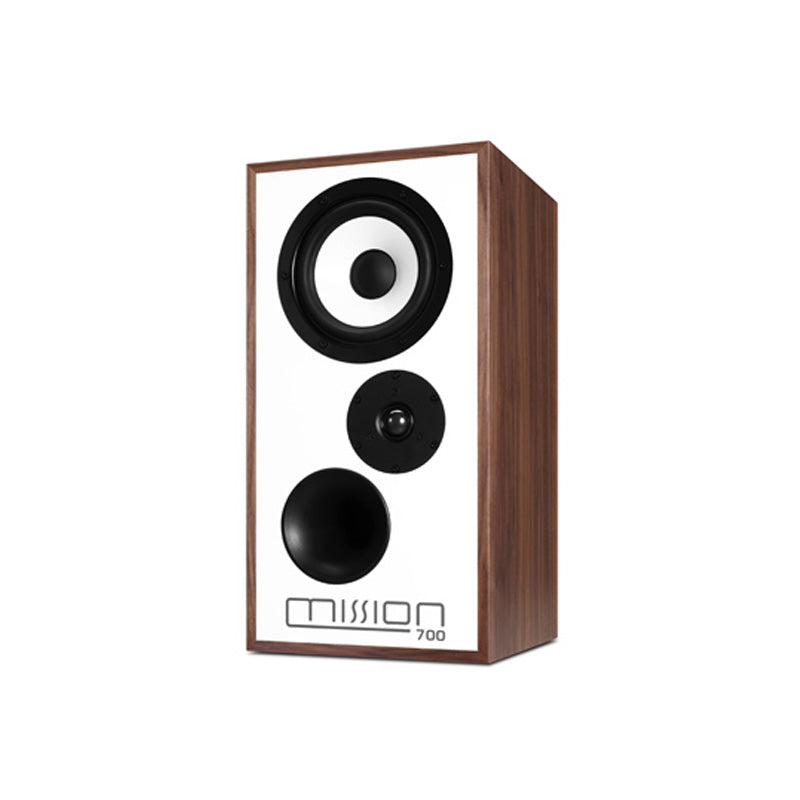
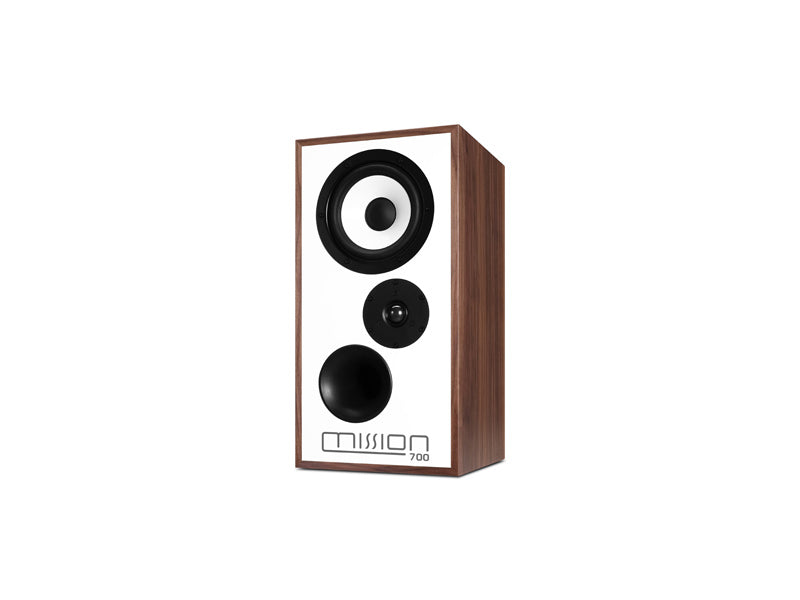
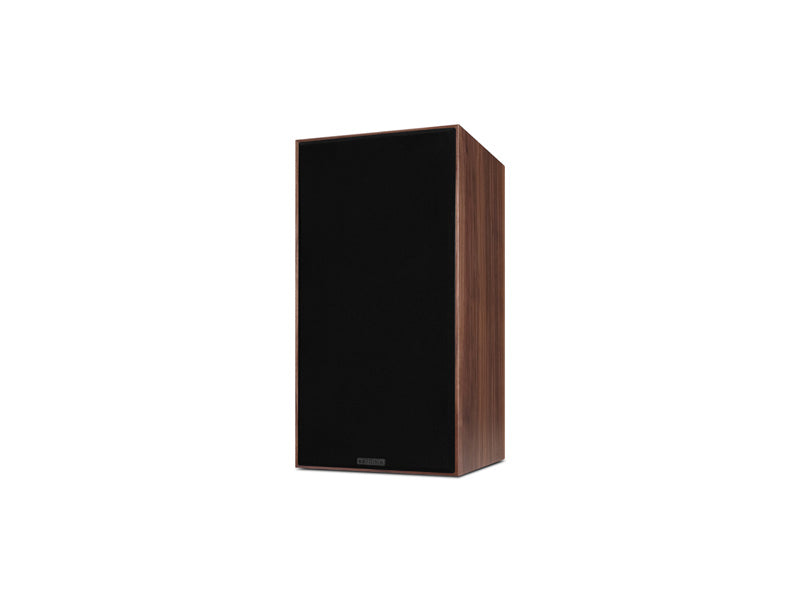
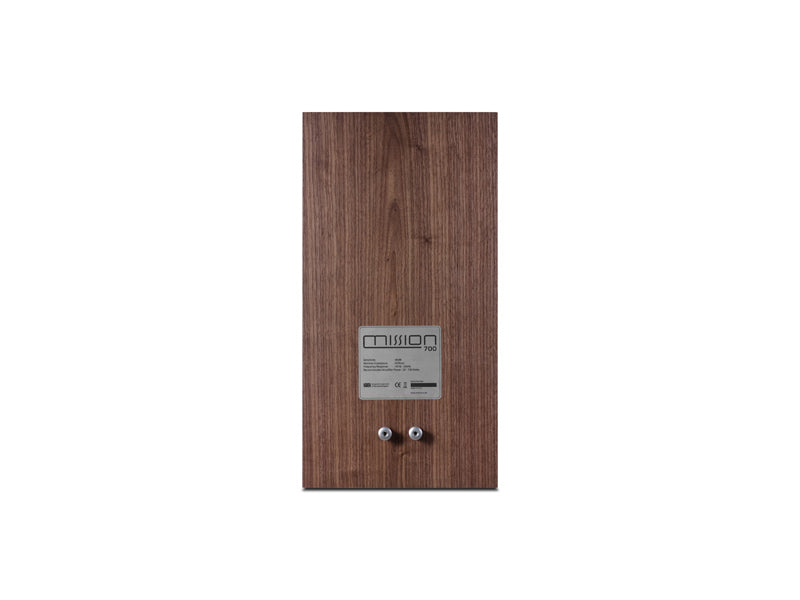
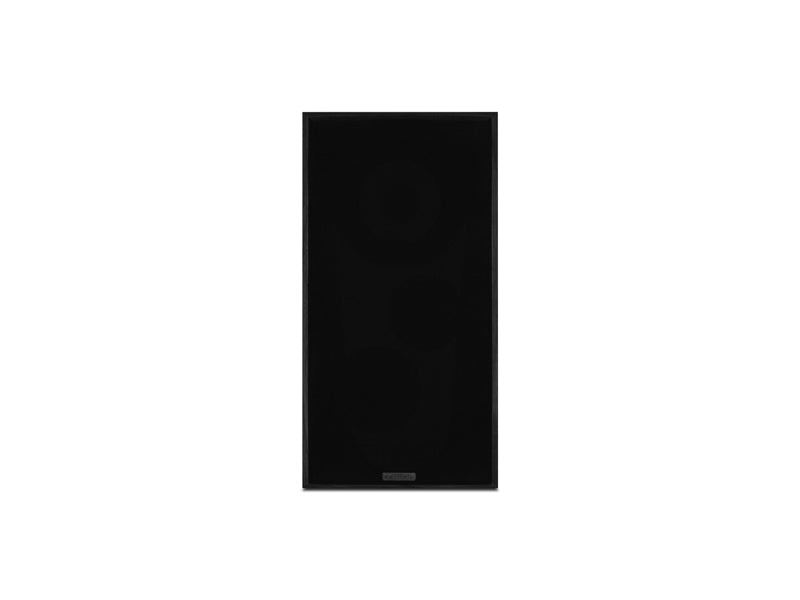
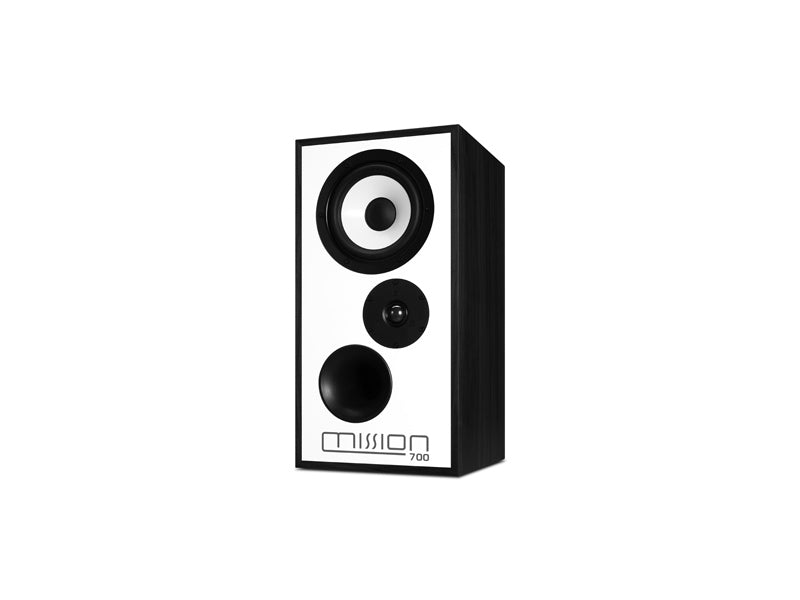
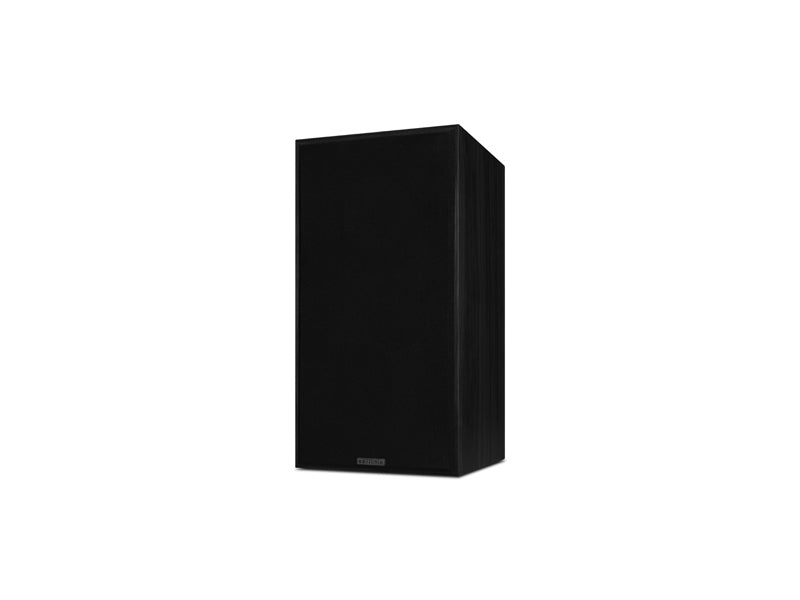
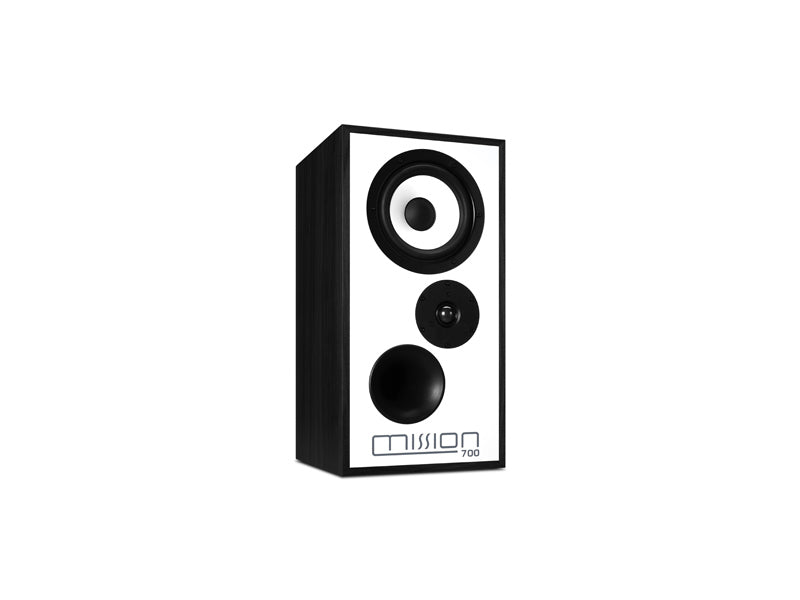
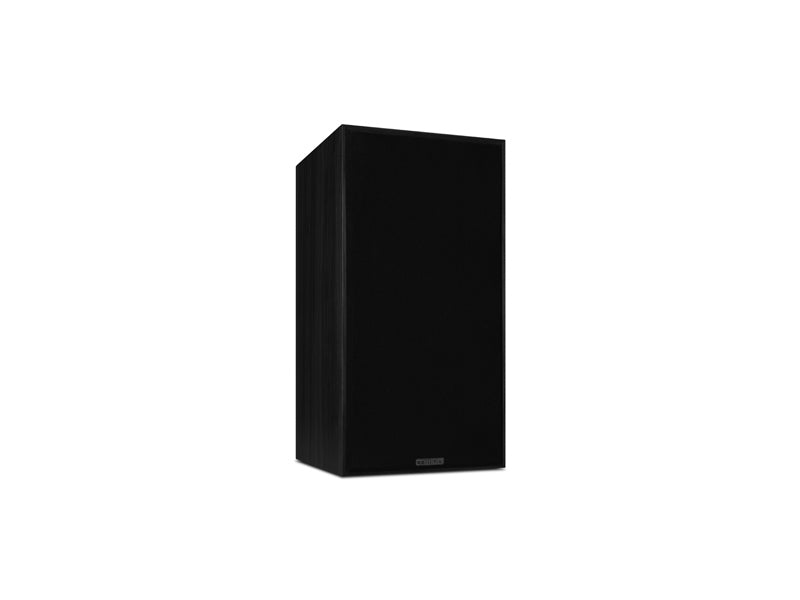
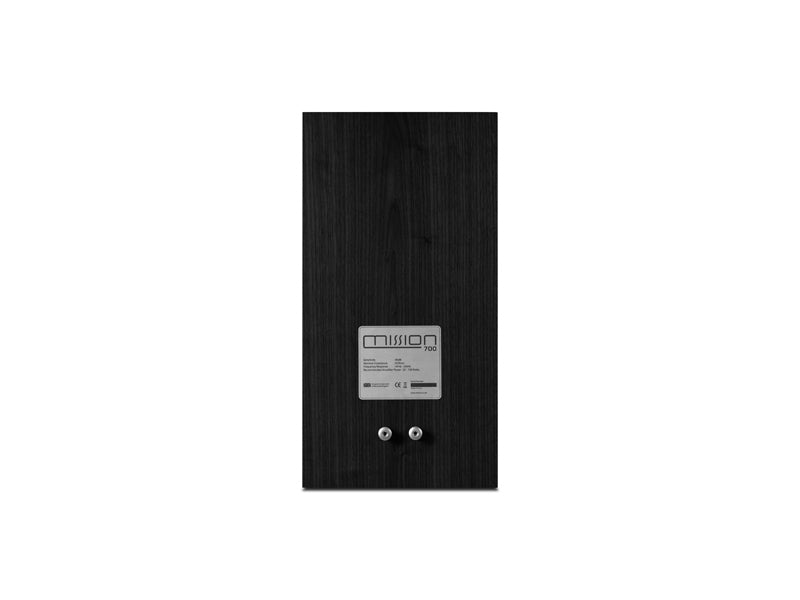
Mission 700 Bookshelf Loudspeakers (Metal Stands Optional)
$1,799.00
Product Details
Mission 700 Bookshelf Loudspeakers at Vinyl Sound Toronto Canada
The Mission 700 is a two-way bass-reflex standmount loudspeaker from Mission (Huntingdon, Cambridgeshire, United Kingdom), available at Vinyl Sound in Toronto, Canada. Designed by IAG's Director of Acoustic Design Peter Comeau, the 700 revives the original Mission 700 first introduced in 1980 — one of the earliest loudspeakers to feature Inverted Driver Geometry (IDG). Incorporating Mission's 45 years of loudspeaker development, the new 700 pairs a 6.5-inch mineral-loaded polypropylene mid/bass driver with a 28mm microfibre soft dome tweeter, achieving bass extension to 38Hz (-6dB) from a 24.8-litre cabinet that is as visually distinctive as it is acoustically refined.
Inverted Driver Geometry
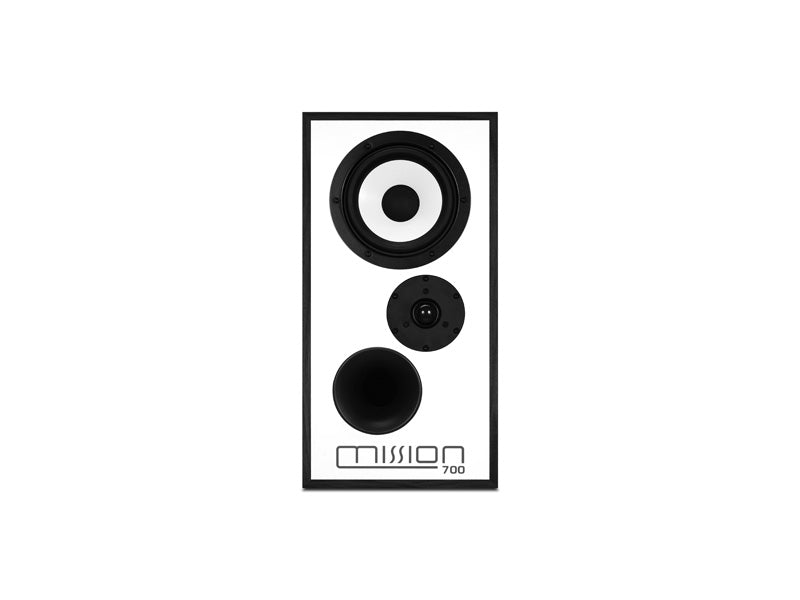
Inverted Driver Geometry is one of Mission's most defining engineering contributions to loudspeaker design, and the Mission 700 is the model that introduced it. By positioning the tweeter below the mid/bass driver rather than above it, IDG equalises the path length from each driver to the listener's ears, bringing their outputs into time alignment at the ideal listening height. This improves stereo imaging precision, phase coherence, and the sense of the two drivers working as a single unified system. Implementing IDG correctly requires more than simply flipping the cabinet: every dimensional relationship, including driver spacing, baffle geometry, and crossover timing, must be calculated precisely to achieve the acoustic benefit the geometry promises. In the new 700, Mission has carried this calculation through with the same discipline applied to its flagship 770.
Polypropylene Mid/Bass Driver and 28mm Microfibre Tweeter
The Mission 700 uses a model-specific 6.5-inch (165mm) mineral-loaded polypropylene mid/bass driver built on a rigid cast chassis with a low-density surround engineered for improved cone-termination control. Mineral loading stiffens the polypropylene cone for tighter, faster bass output that articulates the dynamics of low-frequency instruments cleanly and without overhang. The reflex port is carefully profiled both internally and externally to minimize airflow distortion and extend bass reach to below 38Hz in room — a significant result for a cabinet of this volume. The high-frequency driver is a 28mm coated microfibre soft dome operating within a damped rear chamber that pushes its fundamental resonance well below the 3.0kHz crossover frequency, enabling smooth, clear treble reproduction that integrates naturally with the mid/bass driver across the full audio band.
Cabinet and Crossover
The Mission 700 cabinet uses a sandwich construction of differing wood panels bonded by a layer of damping adhesive, suppressing panel resonances without the need for the traditional bitumen-pad approach. Internal bracing reinforces the front baffle and support structure, while a combination of acoustic foam and long-hair fibre manages internal reflections and standing waves without overdamping the bass. The exterior retains the original 700's iconic form: hand-applied walnut pearl or black oak real-wood veneers with a white laminated front baffle, faithful to the aesthetic that distinguished the original model on its 1980 debut. The crossover network is developed using advanced software-based mapping and simulation refined by thousands of hours of listening tests, delivering the musically coherent, low-coloration performance that Mission's design approach is known for.
Key Features
- Inverted Driver Geometry (IDG): Tweeter positioned below the mid/bass driver to equalise path lengths and improve time alignment, stereo imaging, and phase coherence at the listening position.
- 6.5-Inch Mineral-Loaded Polypropylene Mid/Bass Driver: A model-specific motor system and rigid cast chassis deliver fast, articulate bass extending to below 38Hz in room from a compact 24.8-litre cabinet.
- 28mm Coated Microfibre Soft Dome Tweeter: Operates in a dedicated damped rear chamber that places its resonant frequency below the 3.0kHz crossover point for smooth, stable high-frequency output.
- Sandwich Cabinet Construction: Differing wood panels bonded with damping adhesive suppress resonances, complemented by internal acoustic foam and long-hair fibre for reflection control.
- Software-Mapped Crossover Network: Thousands of hours of listening tests combined with precision acoustic simulation produce a crossover that integrates both drivers into a seamless, musically engaging whole.
- Real-Wood Veneer Finish: Available in walnut pearl or black oak, with a hand-applied finish and signature white laminated front baffle echoing the original 1980 Mission 700 aesthetic.
- Matching Mission 700 Stands Optional Add on: Precision-manufactured high-carbon steel stands with internal damping, interlocked base frame, and hardened stainless steel spikes optimise the 700's time-alignment geometry and mechanical stability.
- Wide Amplifier Compatibility: 8-ohm nominal impedance and 86dB sensitivity suit amplifiers from 25W to 150W across solid-state and valve designs.
Technical Specifications
| Type | 2-way vented-box standmount |
| Enclosure | Bass reflex |
| Mid/Bass Driver | 6.5" (165mm) mineral-loaded polypropylene cone |
| Treble Driver | 1.25" (28mm) coated microfibre soft dome |
| Crossover Frequency | 3.0kHz |
| Sensitivity (2.83V @ 1m) | 86dB |
| Nominal Impedance | 8 ohms |
| Minimum Impedance | 5.2 ohms |
| Recommended Amplifier Power | 25 to 150W |
| Frequency Response (+/-3dB) | 45Hz to 20kHz |
| Bass Extension (-6dB) | 38Hz |
| Peak SPL | 106dB |
| Cabinet Volume | 24.8 litres |
| Height (on plinth) | 510mm |
| Width | 260mm |
| Depth (with terminals) | 292mm |
| Net Weight (per speaker) | 12.8kg |
| Finishes Available | Walnut Pearl, Black Oak |
| Country of Design | United Kingdom |
Mission 700 Stand Specifications
- Columns: High-carbon steel with internal damping
- Top Plate: High-carbon steel
- Base Frame: Interlocked high-carbon steel tube
- Base Spikes: Hardened stainless steel
- Height (on spikes): 485mm
- Width: 320mm
- Depth: 330mm
- Top Plate (W x D): 260 x 270mm
- Net Weight (per stand): 6.5kg
Awards and Critical Recognition
- StereoNET Applause Award, 2023
- AUDIO stereoplay Goldenes Ohr 2024, Bronze Award
Frequently Asked Questions
What is the Mission 700?
The Mission 700 is a two-way bass-reflex standmount loudspeaker from Mission, engineered in Huntingdon, Cambridgeshire, United Kingdom. It features a 6.5-inch mineral-loaded polypropylene mid/bass driver, a 28mm coated microfibre soft dome tweeter, Inverted Driver Geometry (IDG), and a frequency response of 45Hz to 20kHz (+/-3dB), with bass extension to 38Hz in room. It is the modern re-engineering of the original Mission 700, introduced in 1980, which was among the first loudspeakers to use an inverted driver arrangement for improved time alignment.
How does the Mission 700 compare to the KEF Q350 and the Wharfedale Evo 4.2?
The Mission 700 is a larger and more assertively voiced standmount than the KEF Q350. Where the Q350 uses KEF's coincident Uni-Q driver array for a particularly wide and even dispersion pattern, the Mission 700 prioritizes time alignment through its Inverted Driver Geometry configuration and delivers more bass weight from its larger 24.8-litre cabinet. Against the Wharfedale Evo 4.2, the Mission 700 presents a more energetic, forward character versus the Wharfedale's typically warmer and more relaxed presentation. Both the KEF and the Wharfedale are conventional driver-above-tweeter designs; the Mission 700's IDG layout produces a fundamentally different phase relationship at the listening position that its designer, Peter Comeau, considers a genuine acoustic advantage for stereo imaging.
What is Inverted Driver Geometry and why does it matter?
Inverted Driver Geometry (IDG) is Mission's term for placing the tweeter below the mid/bass driver rather than above it. In a standard speaker cabinet, the tweeter sits at the top and the woofer below, which means sound from the two drivers travels different distances before reaching the listener at ear level. IDG reverses this arrangement so the acoustic path from each driver to the listening position is more nearly equal, improving time alignment and phase coherence. The Mission 700 was the original speaker to pioneer this design in 1980, and Mission has continued to use IDG across its range ever since. The benefit is most audible in stereo imaging precision and the sense of the speaker's sound emanating from a single, coherent point rather than two separate sources.
Can the Mission 700 be used without its dedicated stands?
The Mission 700 can be used on alternative stands, but Mission specifically engineered its matching high-carbon steel stands to position the tweeter at the correct height for optimal time alignment at the listening position, which is integral to how Inverted Driver Geometry functions in practice. The dedicated stands are also internally damped and use a top plate dimensioned precisely to the 700's footprint, minimizing mechanical resonance transfer from floor to cabinet. Using aftermarket stands of a different height may shift the acoustic axis away from the IDG-optimized listening position. For the best performance, Mission's matching 700 stands are the recommended solution, and they are included with the loudspeaker at Vinyl Sound in Toronto.
Where can I buy the Mission 700 in Toronto or Canada?
The Mission 700 is available at Vinyl Sound, an authorised Mission dealer in Toronto, Canada. Vinyl Sound carries the Mission 700 with its matching stands and can provide advice on system matching, amplifier pairing, and placement to get the most from Inverted Driver Geometry in your listening room. Customers across Canada are welcome to contact Vinyl Sound directly for availability and purchasing options.
What amplifier works best with the Mission 700?
The Mission 700 accepts amplifiers rated from 25W to 150W into its 8-ohm nominal load, with a minimum impedance of 5.2 ohms. Its 86dB sensitivity is moderate, meaning an amplifier with a stable output into lower impedances and reasonable current delivery will produce the best results. Both solid-state integrated amplifiers and modestly powered valve designs partner well with the 700. Mission's own integrated amplifiers, including the Mission AX Series, are frequently paired with the 700 and represent a synergistic combination, though the speaker performs confidently with amplification from brands such as Audiolab, Rega, and Naim at comparable price points.
How does the Mission 700 differ from the Mission 770?
The Mission 770 is the larger flagship model in Mission's heritage-reissue lineup, while the Mission 700 is the more compact sister design. The 770 uses an 8-inch mid/bass driver in a 38.5-litre cabinet and extends bass to 30Hz (-6dB), making it a physically larger and deeper-reaching speaker suited to bigger rooms. The 700 uses a 6.5-inch driver in a 24.8-litre cabinet, with bass reaching 38Hz (-6dB), offering a more space-friendly footprint without sacrificing the core Mission sonic character. Both share polypropylene cone and microfibre dome driver technology, sandwich cabinet construction, and the same design leadership from Peter Comeau. The 770 does not use Inverted Driver Geometry; the IDG layout is a defining and exclusive feature of the 700 within the current Mission heritage range.
Is the Mission 700 suitable for vinyl playback?
The Mission 700 is particularly well suited to vinyl sources. Its design lineage traces directly to an era when optimizing for analog playback was a primary engineering consideration, and the tonal balance Peter Comeau dialled into the new 700 — bright, lively, and detailed, but refined for modern digital and analog sources alike — makes it responsive to the warmth and dynamic nuance of vinyl records. Reviewers at StereoNET and Fidelity Magazine praised the 700's fast transient response and natural bass behavior, qualities that complement turntable-based systems. At Vinyl Sound in Toronto, the Mission 700 is often demonstrated alongside turntable setups and can be auditioned in that context on request.
Mission 700 Bookshelf Loudspeakers at Vinyl Sound Toronto Canada
The Mission 700 is a two-way bass-reflex standmount loudspeaker from Mission (Huntingdon, Cambridgeshire, United Kingdom), available at Vinyl Sound in Toronto, Canada. Designed by IAG's Director of Acoustic Design Peter Comeau, the 700 revives the original Mission 700 first introduced in 1980 — one of the earliest loudspeakers to feature Inverted Driver Geometry (IDG). Incorporating Mission's 45 years of loudspeaker development, the new 700 pairs a 6.5-inch mineral-loaded polypropylene mid/bass driver with a 28mm microfibre soft dome tweeter, achieving bass extension to 38Hz (-6dB) from a 24.8-litre cabinet that is as visually distinctive as it is acoustically refined.
Inverted Driver Geometry
Inverted Driver Geometry is one of Mission's most defining engineering contributions to loudspeaker design, and the Mission 700 is the model that introduced it. By positioning the tweeter below the mid/bass driver rather than above it, IDG equalises the path length from each driver to the listener's ears, bringing their outputs into time alignment at the ideal listening height. This improves stereo imaging precision, phase coherence, and the sense of the two drivers working as a single unified system. Implementing IDG correctly requires more than simply flipping the cabinet: every dimensional relationship, including driver spacing, baffle geometry, and crossover timing, must be calculated precisely to achieve the acoustic benefit the geometry promises. In the new 700, Mission has carried this calculation through with the same discipline applied to its flagship 770.
Polypropylene Mid/Bass Driver and 28mm Microfibre Tweeter
The Mission 700 uses a model-specific 6.5-inch (165mm) mineral-loaded polypropylene mid/bass driver built on a rigid cast chassis with a low-density surround engineered for improved cone-termination control. Mineral loading stiffens the polypropylene cone for tighter, faster bass output that articulates the dynamics of low-frequency instruments cleanly and without overhang. The reflex port is carefully profiled both internally and externally to minimize airflow distortion and extend bass reach to below 38Hz in room — a significant result for a cabinet of this volume. The high-frequency driver is a 28mm coated microfibre soft dome operating within a damped rear chamber that pushes its fundamental resonance well below the 3.0kHz crossover frequency, enabling smooth, clear treble reproduction that integrates naturally with the mid/bass driver across the full audio band.
Cabinet and Crossover
The Mission 700 cabinet uses a sandwich construction of differing wood panels bonded by a layer of damping adhesive, suppressing panel resonances without the need for the traditional bitumen-pad approach. Internal bracing reinforces the front baffle and support structure, while a combination of acoustic foam and long-hair fibre manages internal reflections and standing waves without overdamping the bass. The exterior retains the original 700's iconic form: hand-applied walnut pearl or black oak real-wood veneers with a white laminated front baffle, faithful to the aesthetic that distinguished the original model on its 1980 debut. The crossover network is developed using advanced software-based mapping and simulation refined by thousands of hours of listening tests, delivering the musically coherent, low-coloration performance that Mission's design approach is known for.
Key Features
- Inverted Driver Geometry (IDG): Tweeter positioned below the mid/bass driver to equalise path lengths and improve time alignment, stereo imaging, and phase coherence at the listening position.
- 6.5-Inch Mineral-Loaded Polypropylene Mid/Bass Driver: A model-specific motor system and rigid cast chassis deliver fast, articulate bass extending to below 38Hz in room from a compact 24.8-litre cabinet.
- 28mm Coated Microfibre Soft Dome Tweeter: Operates in a dedicated damped rear chamber that places its resonant frequency below the 3.0kHz crossover point for smooth, stable high-frequency output.
- Sandwich Cabinet Construction: Differing wood panels bonded with damping adhesive suppress resonances, complemented by internal acoustic foam and long-hair fibre for reflection control.
- Software-Mapped Crossover Network: Thousands of hours of listening tests combined with precision acoustic simulation produce a crossover that integrates both drivers into a seamless, musically engaging whole.
- Real-Wood Veneer Finish: Available in walnut pearl or black oak, with a hand-applied finish and signature white laminated front baffle echoing the original 1980 Mission 700 aesthetic.
- Matching Mission 700 Stands Optional Add on: Precision-manufactured high-carbon steel stands with internal damping, interlocked base frame, and hardened stainless steel spikes optimise the 700's time-alignment geometry and mechanical stability.
- Wide Amplifier Compatibility: 8-ohm nominal impedance and 86dB sensitivity suit amplifiers from 25W to 150W across solid-state and valve designs.
Technical Specifications
| Type | 2-way vented-box standmount |
| Enclosure | Bass reflex |
| Mid/Bass Driver | 6.5" (165mm) mineral-loaded polypropylene cone |
| Treble Driver | 1.25" (28mm) coated microfibre soft dome |
| Crossover Frequency | 3.0kHz |
| Sensitivity (2.83V @ 1m) | 86dB |
| Nominal Impedance | 8 ohms |
| Minimum Impedance | 5.2 ohms |
| Recommended Amplifier Power | 25 to 150W |
| Frequency Response (+/-3dB) | 45Hz to 20kHz |
| Bass Extension (-6dB) | 38Hz |
| Peak SPL | 106dB |
| Cabinet Volume | 24.8 litres |
| Height (on plinth) | 510mm |
| Width | 260mm |
| Depth (with terminals) | 292mm |
| Net Weight (per speaker) | 12.8kg |
| Finishes Available | Walnut Pearl, Black Oak |
| Country of Design | United Kingdom |
Mission 700 Stand Specifications
- Columns: High-carbon steel with internal damping
- Top Plate: High-carbon steel
- Base Frame: Interlocked high-carbon steel tube
- Base Spikes: Hardened stainless steel
- Height (on spikes): 485mm
- Width: 320mm
- Depth: 330mm
- Top Plate (W x D): 260 x 270mm
- Net Weight (per stand): 6.5kg
Awards and Critical Recognition
- StereoNET Applause Award, 2023
- AUDIO stereoplay Goldenes Ohr 2024, Bronze Award
Frequently Asked Questions
What is the Mission 700?
The Mission 700 is a two-way bass-reflex standmount loudspeaker from Mission, engineered in Huntingdon, Cambridgeshire, United Kingdom. It features a 6.5-inch mineral-loaded polypropylene mid/bass driver, a 28mm coated microfibre soft dome tweeter, Inverted Driver Geometry (IDG), and a frequency response of 45Hz to 20kHz (+/-3dB), with bass extension to 38Hz in room. It is the modern re-engineering of the original Mission 700, introduced in 1980, which was among the first loudspeakers to use an inverted driver arrangement for improved time alignment.
How does the Mission 700 compare to the KEF Q350 and the Wharfedale Evo 4.2?
The Mission 700 is a larger and more assertively voiced standmount than the KEF Q350. Where the Q350 uses KEF's coincident Uni-Q driver array for a particularly wide and even dispersion pattern, the Mission 700 prioritizes time alignment through its Inverted Driver Geometry configuration and delivers more bass weight from its larger 24.8-litre cabinet. Against the Wharfedale Evo 4.2, the Mission 700 presents a more energetic, forward character versus the Wharfedale's typically warmer and more relaxed presentation. Both the KEF and the Wharfedale are conventional driver-above-tweeter designs; the Mission 700's IDG layout produces a fundamentally different phase relationship at the listening position that its designer, Peter Comeau, considers a genuine acoustic advantage for stereo imaging.
What is Inverted Driver Geometry and why does it matter?
Inverted Driver Geometry (IDG) is Mission's term for placing the tweeter below the mid/bass driver rather than above it. In a standard speaker cabinet, the tweeter sits at the top and the woofer below, which means sound from the two drivers travels different distances before reaching the listener at ear level. IDG reverses this arrangement so the acoustic path from each driver to the listening position is more nearly equal, improving time alignment and phase coherence. The Mission 700 was the original speaker to pioneer this design in 1980, and Mission has continued to use IDG across its range ever since. The benefit is most audible in stereo imaging precision and the sense of the speaker's sound emanating from a single, coherent point rather than two separate sources.
Can the Mission 700 be used without its dedicated stands?
The Mission 700 can be used on alternative stands, but Mission specifically engineered its matching high-carbon steel stands to position the tweeter at the correct height for optimal time alignment at the listening position, which is integral to how Inverted Driver Geometry functions in practice. The dedicated stands are also internally damped and use a top plate dimensioned precisely to the 700's footprint, minimizing mechanical resonance transfer from floor to cabinet. Using aftermarket stands of a different height may shift the acoustic axis away from the IDG-optimized listening position. For the best performance, Mission's matching 700 stands are the recommended solution.
Where can I buy the Mission 700 in Toronto or Canada?
The Mission 700 is available at Vinyl Sound, an authorised Mission dealer in Toronto, Canada. Vinyl Sound carries the Mission 700 with its matching stands and can provide advice on system matching, amplifier pairing, and placement to get the most from Inverted Driver Geometry in your listening room. Customers across Canada are welcome to contact Vinyl Sound directly for availability and purchasing options.
What amplifier works best with the Mission 700?
The Mission 700 accepts amplifiers rated from 25W to 150W into its 8-ohm nominal load, with a minimum impedance of 5.2 ohms. Its 86dB sensitivity is moderate, meaning an amplifier with a stable output into lower impedances and reasonable current delivery will produce the best results. Both solid-state integrated amplifiers and modestly powered valve designs partner well with the 700. Mission's own integrated amplifiers, including the Mission AX Series, are frequently paired with the 700 and represent a synergistic combination, though the speaker performs confidently with amplification from brands such as Audiolab, Rega, and Naim at comparable price points.
How does the Mission 700 differ from the Mission 770?
The Mission 770 is the larger flagship model in Mission's heritage-reissue lineup, while the Mission 700 is the more compact sister design. The 770 uses an 8-inch mid/bass driver in a 38.5-litre cabinet and extends bass to 30Hz (-6dB), making it a physically larger and deeper-reaching speaker suited to bigger rooms. The 700 uses a 6.5-inch driver in a 24.8-litre cabinet, with bass reaching 38Hz (-6dB), offering a more space-friendly footprint without sacrificing the core Mission sonic character. Both share polypropylene cone and microfibre dome driver technology, sandwich cabinet construction, and the same design leadership from Peter Comeau. The 770 does not use Inverted Driver Geometry; the IDG layout is a defining and exclusive feature of the 700 within the current Mission heritage range.
Is the Mission 700 suitable for vinyl playback?
The Mission 700 is particularly well suited to vinyl sources. Its design lineage traces directly to an era when optimizing for analog playback was a primary engineering consideration, and the tonal balance Peter Comeau dialled into the new 700 — bright, lively, and detailed, but refined for modern digital and analog sources alike — makes it responsive to the warmth and dynamic nuance of vinyl records. Reviewers at StereoNET and Fidelity Magazine praised the 700's fast transient response and natural bass behavior, qualities that complement turntable-based systems. At Vinyl Sound in Toronto, the Mission 700 is often demonstrated alongside turntable setups and can be auditioned in that context on request.
Similar items



)